
The programme of B.Tech in Electrical Engineering with flexible time shifts is aimed for working professionals who want to improve their skills in this dynamic field. This program is designed to provide students with a comprehensive understanding of electrical systems, energy generation, transmission, and distribution, as well as electronics control systems and renewable energy technologies. Through a combination of lectures, laboratory classes, projects, and hands-on training, students will develop the knowledge and skills necessary to succeed in a variety of fields and electrical engineering. With the provision of flexible timings in the program, working professionals have the opportunity to plan their academic program to meet their needs and obligations. This flexibility is especially helpful for students who have part-time jobs, internships, family responsibilities, or other obligations that make it difficult to attend classes during traditional hours. Overall, this flexible program offers students the opportunity to tailor their academic experience to suit their needs and goals. By providing flexibility in course planning and learning, universities can meet the diverse needs and aspirations of their student population, improving the overall educational experience and student development. Let’s take a look at the main elements of the program.
APPLY TODAY FOR

This B.Tech EE lateral entry program for working professionals goes beyond the basics. Study electrical engineering and topics related to the design, development, and operation of electrical systems. A variety of engineering and mathematics courses are also offered, providing students with a strong foundation for a variety of electrical engineering courses Calculus, Differential Equations, Mechanical Engineering, Graphic Design, and Computer Programming.

Theory alone will not be sufficient. The program emphasizes practical skills and graduates will have a strong foundation in the fundamental principles of engineering.

Is designed for professionals who combine work and education. You don’t need to quit your job; unhindered career development.

Professionals fall into specific fields where expertise is honored. Your career path progresses as you gain specialized knowledge.

Industry meets industry needs. Electrical Engineering is evolving rapidly and it is important to keep up with modern ideas and technology.

The flexible time engineering program for B.Tech. in Electrical Engineering offered by Sanskriti University is fully recognized programme and is approved by UGC/AICTE*. The university meets all standards specified in the accreditation guide.
A flexible, engineering course emphasizing the fundamentals of engineering and practical applications, focusing on contemporary application. Students gain a better understanding of their field as they prepare for the graduate workforce.
To be eligible to enroll in technical courses with the classes being conducted in flexible shift timings, students normally need to have at least one year of full-time work experience in the relevant field. This allows interns to add insight to their work.
The engineering program complies with the standards set by the All India Council for Technical Education (AICTE*) as per the prescribed guidelines.
B.Tech in Electrical Engineering-The program generally lasts three years and consists of six semesters. Semester consists of core courses, elective courses, practical applications, and project studies. The curriculum is designed to cover a wide range of subjects.
The B.Tech in Electrical Engineering program recognizes the diverse needs and responsibilities of working professionals and offers flexible scheduling. This allows students to attend classes in the evening, allowing them to balance their studies with other responsibilities such as work. In short, the B.Tech program in Electrical Engineering provides a valuable and well-rounded education that prepares students for exciting careers in fast-growing fields such as electrical engineering, electronics, control systems, and renewable energy. Whether your interests are in energy production, distribution, electronics, or renewable energy technologies, this program provides the knowledge, skills, and practical experience needed to succeed in a variety of industries and sectors.
Courses are conducted on weekdays (in the evenings after professional working hours), weekends, and public holidays to meet credit requirements as per AICTE* guidelines.

Laboratory studies are held on campus every Saturday.

Once the course is completed, recorded lessons will be accessible via the Learning Management System (LMS).

Students can access the laboratory remotely and simulate real-time experiences via video. These labs are available 24/7, allowing students to test their skills at any time.
Performance is monitored and evaluated through a variety of learning activities, including mid-semester exams, assignments, semester exams, etc.

Students’ progress and preparedness in the course will be tested by various type of examinations like Mid Term, End Term, Practical Exam & VIVA Voce via proctored and offline mode.
| Job Role | Average Annual Salary |
|---|---|
| Electrical Engineer | 4 LPA to 8 LPA |
| Control Systems Engineer | 6 LPA to 10 LPA |
| Instrumentation Engineer | 12 LPA to 24 LPA |
| Electrical Design Engineer | 5 LPA to 10 LPA |
| Power Electronics Engineer | 7 LPA to 15 LPA |
| Renewable Energy Engineer | 4 LPA to 10 LPA |
| Project Engineer | 5 LPA to 9 LPA |
| Field Service Engineer | 4 LPA to 8 LPA |










| Sr.No. | Subject | L-T-P | Credit |
| 1 | Math IV | 3-1-0 | 4 |
| 2 | Technical Communication | 2-1-0 | 3 |
| 3 | Electromagnetic Field Theory | 3-1-0 | 4 |
| 4 | Electrical Measurements & Instrumentation | 3-1-0 | 4 |
| 5 | Basic Signals & Systems | 2-1-0 | 3 |
| 6 | Circuit Simulation Lab | 0-0-2 | 1 |
| 7 | Electrical Measurements and Instrumentation Lab | 0-0-2 | 1 |
| 8 | Electrical Workshop | 0-0-2 | 1 |
| 9 | Python Programming | 2-0-0 | 2 |
| 10 | Internship Assessment | - - - | 2 |
| Total | 25 | ||
| Sr.No. | Subject | L-T-P | Credit |
| 1 | Electric and Hybrid Vehicles | 3-1-0 | 4 |
| 2 | Universal Human Value and Professional Ethics | 2-1-0 | 3 |
| 3 | Digital Electronics | 3-1-0 | 4 |
| 4 | Electrical Machines-I | 3-1-0 | 4 |
| 5 | Networks Analysis & Synthesis | 2-1-0 | 3 |
| 6 | Network Analysis & Synthesis Lab | 0-0-2 | 1 |
| 7 | Electrical Machines-I Lab | 0-0-2 | 1 |
| 8 | Digital Electronics Lab | 0-0-2 | 1 |
| 9 | Cyber Security | 2-0-0 | 2 |
| 10 | Sports and Yoga | 0-0-3 | NC |
| Total | 23 | ||
| Sr.No. | Subject | L-T-P | Credit |
| 1 | Power System - I | 3-1-0 | 4 |
| 2 | Control System | 3-1-0 | 4 |
| 3 | Electrical Machines- II | 3-1-0 | 4 |
| 4 | Sensors and Transducers | 3-0-0 | 3 |
| 5 | Analog & Digital Communication | 3-0-0 | 3 |
| 6 | Power System-I Lab | 0-0-2 | 1 |
| 7 | Control System Lab | 0-0-2 | 1 |
| 8 | Electrical Machines - II Lab | 0-0-2 | 1 |
| 9 | Mini Project | 0-0-2 | 1 |
| 10 | Constitution of India | 2-0-0 | NC |
| Total | 22 | ||
| Sr.No. | Subject | L-T-P | Credit |
| 1 | Power System-II | 3-1-0 | 4 |
| 2 | Microprocessor | 3-1-0 | 4 |
| 3 | Power Electronics | 3-1-0 | 4 |
| 4 | Special Electrical Machines | 3-0-0 | 3 |
| 5 | IDEA TO BUSINESS MODEL | 3-0-0 | 3 |
| 6 | Power System-II Lab | 0-0-2 | 1 |
| 7 | Microprocessor Lab | 0-0-2 | 1 |
| 8 | Power Electronics Lab | 0-0-2 | 1 |
| 9 | Indian Tradition, Culture and Society | 2-0-0 | NC |
| Total | 21 | ||
Yes, this course of B.Tech Electrical Engineering in flexible shifts from Sanskriti University is a valid course because this course is approved by the University Grants Commission.
B.Tech in flexible shifts is a mode of delivering education in which the classes are conducted in flexible timing such as during weekdays in evenings, on weekends, or on public holidays, this helps in maintaining a schedule for working professionals.
Working professionals are those people who are interested in pursuing a degree while being employed, therefore this course is specially tailored for them in flexible shifts. People who already have a diploma or polytechnic and are employed can enroll in this course.
The total fee for this course is around 2,40,000/- INR to 3,00,000/- INR. The total fee is divided into semester-wise installments which is 42,500/- INR per semester. Other than the tuition fee 3000/- is the registration fee that needs to be paid one time during admission and 3000/- INR is the exam fee that needs to be paid each semester before the examination.
The total time taken to graduate from B.Tech EE from Sanskriti University is 3 years which is 6 semesters of six months each. In this course, students or working professionals get admission directly in 2nd year because they have learned all the basics that are taught in the first year of B.Tech during their diploma.
Students enrolling in this course must be working professionals with at least one year of full-time work experience. They should have a diploma or polytechnic with a minimum of 55% qualifying marks.
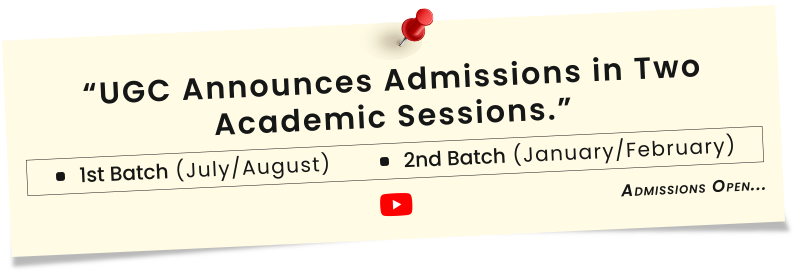
UGC, an apex body, outline provisions to run B.Tech programs in flexible timings for working professionals at Sanskriti University with obligations to follow AICTE* guidelines.